
12 Best Calming Activities Before Bed for Kids
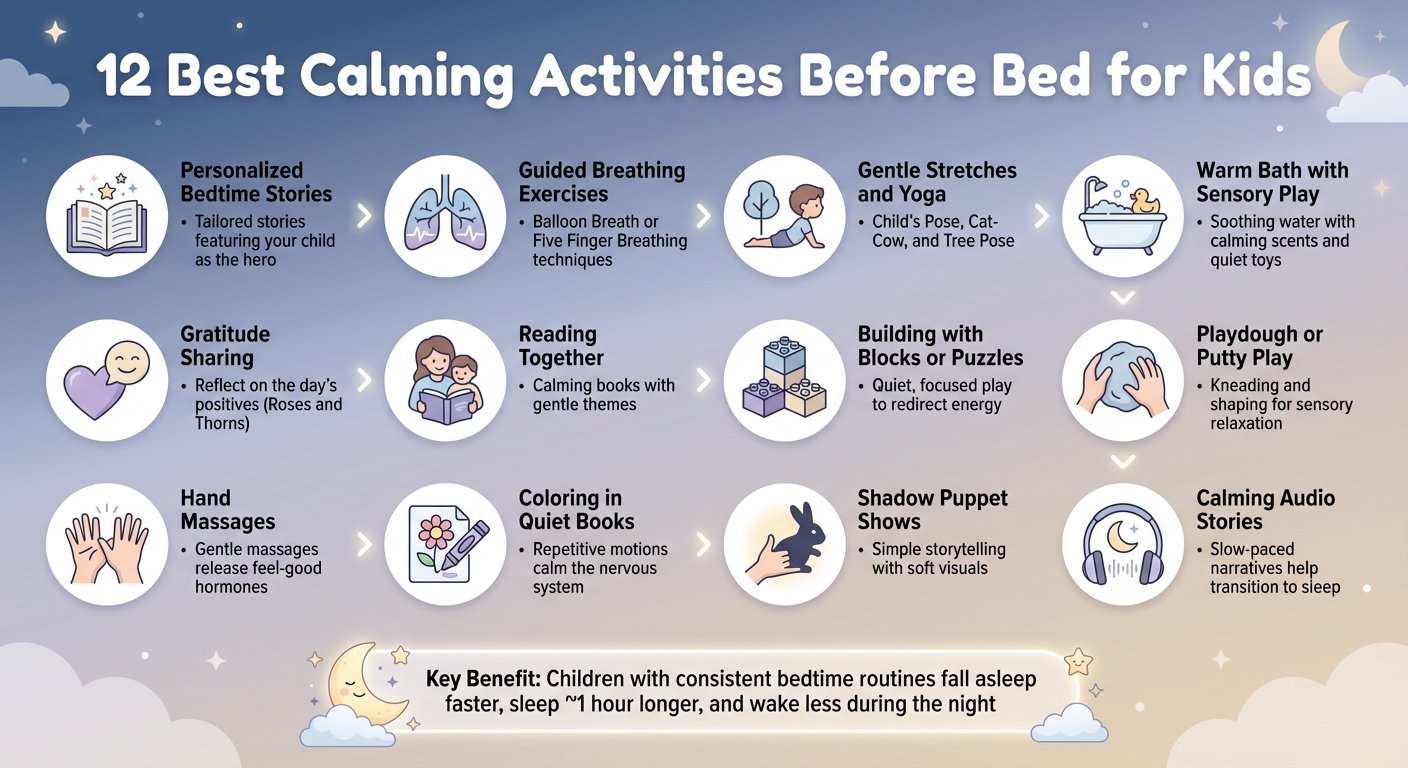
Getting kids to wind down before bed can be tricky, but a consistent bedtime routine can make all the difference. Calming activities help lower stress hormones, promote relaxation, and create a smooth transition to sleep. Here are 12 effective strategies to help your child settle down at night:
- Personalized Bedtime Stories: Tailored stories featuring your child as the hero can build comfort and ease bedtime anxiety.
- Guided Breathing Exercises: Techniques like "Balloon Breath" or "Five Finger Breathing" help calm the mind and body.
- Gentle Stretches and Yoga: Simple poses like Child’s Pose or Cat-Cow release tension and prepare the body for rest.
- Warm Bath with Sensory Play: A soothing bath combined with calming scents and quiet toys signals it’s time to relax.
- Gratitude Sharing: Reflecting on the day’s positives helps shift focus from worries to peaceful thoughts.
- Reading Together: Choose calming books with gentle themes to lower cognitive arousal and bond with your child.
- Building with Blocks or Puzzles: Quiet, focused play helps redirect energy and create a sense of calm.
- Playdough or Putty Play: Kneading and shaping dough relieves stress and offers sensory relaxation.
- Hand Massages: Gentle massages release feel-good hormones and ease bedtime anxiety.
- Coloring in Quiet Books: Repetitive coloring motions calm the nervous system and promote mindfulness.
- Shadow Puppet Shows: Simple storytelling with soft visuals creates a soothing bedtime atmosphere.
- Calming Audio Stories: Slow-paced, gentle narratives help kids relax and transition to sleep.
These activities, when paired with dim lighting and a predictable routine, can transform chaotic evenings into peaceful nights. Consistency is key - stick to a routine that works for your family, and bedtime will become a smoother, more enjoyable experience.
12 Calming Bedtime Activities for Kids
5 Sensory Activities to Help Your Child Sleep Better Every Night | Calming Activities for Children
sbb-itb-d6d0693
1. Kidooki Personalized Bedtime Stories

Kidooki creates bedtime stories tailored specifically to your child, weaving in their name, favorite colors, and interests. These stories come to life with professional audio narration, soothing watercolor illustrations, and a new adventure every night. This personalized touch not only entertains but also fosters a sense of comfort and security for your child.
When children hear themselves as the hero of the story, it strengthens their sense of belonging and helps ease their worries. As Snoozly explains:
Personalized stories, where kids become the main character, also make the moment exciting while reinforcing a sense of belonging.
This mix of enjoyment and reassurance helps draw their attention away from anxious thoughts or repetitive mental loops that might otherwise disrupt sleep.
Each story is designed to include relaxation techniques like deep breathing, guided visualization, and a slower narrative pace, all aimed at encouraging the release of sleep hormones. Research shows that a reading pace slowed by 25–30% can increase serotonin and melatonin production. Additionally, a global study involving 10,085 families found that children with consistent bedtime routines tend to fall asleep more quickly, sleep longer, and wake up less during the night.
To make the experience even more effective, pair the story with dim, warm lighting and a comforting item such as a stuffed animal or weighted blanket. Once the story ends, avoid asking follow-up questions, as this can stimulate the brain. Instead, allow the story to "settle" with a quiet, calming presence for 5–8 minutes.
Try Kidooki’s free trial and see how it transforms bedtime into a peaceful, enjoyable ritual.
2. Guided Breathing and Mindfulness Exercises
Breathing exercises are a simple yet effective way to calm both the body and mind. As Nick Ortner, a well-known author and mindfulness advocate, explains:
Mindful breathing is completely free, requires no special equipment, and can be done anywhere.
Even just a minute or two of focused breathing can help improve concentration and ease feelings of anxiety.
To create a soothing bedtime routine, try introducing these breathing exercises right after your child changes into pajamas. Here are a few playful techniques to explore:
- Balloon Breath: Ask your child to place their hands on their belly and imagine it inflating like a balloon as they inhale and deflating as they exhale.
- Stuffed Animal Breathing: Perfect for younger kids, this involves having them lie down with a stuffed animal on their belly, watching it gently rise and fall with each breath.
- Five Finger Breathing: Your child can trace the fingers of one hand with the other, inhaling as they trace upward and exhaling as they trace downward.
- Hot Chocolate Breath: Encourage your child to pretend they’re holding a cup of hot chocolate - take a deep breath in to "smell" it, then exhale slowly to "cool" it down.
You can also use visual aids like bubbles or pinwheels to help your child learn to control their exhalations.
Spend 1–2 minutes practicing one of these techniques before moving on to storytime. Setting up a special "breathing space", such as a cozy nook with a soft blanket, can signal that it’s time to wind down. Stick with one technique for at least a week to give your child time to get comfortable with it. When you join in, it not only reinforces the habit but also creates a shared moment of calm - a wonderful way to bond before bedtime.
These exercises work beautifully alongside other relaxing activities, helping to create the ideal environment for a peaceful night’s sleep.
3. Simple Stretches and Yoga Poses
After calming storytelling and mindful breathing, gentle stretches can further prepare both the body and mind for a peaceful night's sleep.
Stretching and yoga help release built-up tension, making it easier to relax. These movements encourage the body to shift from a "fight or flight" state to a more restful mode by stimulating the parasympathetic nervous system. As Mariam Gates explains, this practice allows families to "hit a reset button" at the end of the day.
Studies reveal that over 50% of yoga practitioners report improved sleep quality. The secret lies in slow, deliberate movements, which signal the body that it's time to wind down.
A simple bedtime routine could include three or four poses, practiced 15–30 minutes before sleep. Here’s a quick guide:
- Child's Pose (Sea Turtle): Kneel, sit back on your heels, and rest your forehead on the floor. This pose eases shoulder and back tension.
- Cat-Cow Stretch: On all fours, alternate between arching and rounding your back. This movement helps release stiffness in the neck and spine.
- Tree Pose: Stand on one leg, place the foot of the other leg against your inner thigh or calf, and balance. This pose encourages focus and quiets the mind.
- Savasana (Corpse Pose): Lie flat on your back, breathe deeply, and let your body fully relax. This final pose helps transition smoothly into sleep.
To make the experience more engaging for children, use playful names for the poses and incorporate simple affirmations. Ensure the movements feel comfortable and avoid anything that causes pain.
These poses can become a cornerstone of your nightly routine, helping your child ease into sleep while fostering a sense of calm for the whole family. The best part? You don’t need any special equipment - just comfy pajamas and a soft carpet or yoga mat. Practicing together as a family not only models healthy habits but also creates a moment of shared tranquility that everyone can enjoy.
Consistency is key. Incorporating these stretches into your nightly ritual can help nurture a sense of relaxation and connection.
4. Warm Bath with Sensory Play
A warm bath can be a great way to help prepare your child for sleep. The soothing warmth of the water helps relax tense muscles, and when the body cools down afterward, it naturally signals to the brain that it's time to rest.
Nearly 30% of children experience sleep difficulties, and sensory integration challenges can often play a role in these struggles. By incorporating sensory elements into bath time, you can turn a simple task into a calming ritual. Certified Pediatric Sleep Consultant Tracy Braunstein highlights the importance of consistent bedtime routines:
A sequence of steps like bath, pajamas, story, and cuddles helps signal to their body and brain that sleep is the next step.
To enhance the experience, dim the lights and add a few drops of lavender or chamomile essential oil to the bathwater for a calming effect. For sensory play, consider using light-up toys like Glo Pals (priced around $19.99–$21.99), which glow in water and provide gentle visual stimulation. Quiet play items such as Fat Brain Toys Squigz ($32.95) or Boon Pipes ($15.95) can offer additional tactile and focused engagement. These elements help create a soothing environment that sets the stage for the rest of the bedtime routine.
For an added layer of relaxation, try placing a warm towel over your child’s lap or shoulders during bath time. This provides proprioceptive input, a type of deep pressure that helps calm the nervous system. You can also encourage your child to blow bubbles or gently push a ping pong ball across the water. Both activities promote rhythmic, deep breathing, which can further ease them into a relaxed state.
After the bath, take it up a notch by warming a towel in the dryer so it’s cozy and comforting when your child steps out. A consistent bath routine like this reinforces sleep cues and makes bedtime a smoother process.
5. Gratitude Sharing and Pillow Talk
After calming activities like a warm bath, taking a few minutes for gratitude sharing can deepen the bond you share with your child before bedtime. These screen-free moments of reflection and gentle conversation can transform a hurried bedtime routine into a meaningful connection. This time allows children to process their day in a safe and supportive space, which can help ease the mental chatter that often interferes with falling asleep.
Gratitude sharing isn’t just heartwarming - it’s also powerful for the brain. Expressing gratitude increases dopamine and serotonin levels while calming areas of the brain linked to negative emotions. For example, studies show that 85% of anxious children aged 7 to 14 struggle with sleep due to an overactive mind at bedtime. Gratitude exercises help redirect their focus from worries to more positive thoughts.
One simple yet effective method is the "Roses and Thorns" exercise. Ask your child to share the best part of their day (the rose) and the most challenging part (the thorn). This practice helps them find something good, even on tough days. If your child is unsure how to start, try asking specific questions like, "What made you smile today?" or "Did you see someone do something kind?" For younger kids, simpler prompts like "Who gave you a hug today?" can work wonders.
Pediatric sleep expert Ronald Dahl highlights the importance of this emotional wind-down:
"The process of falling asleep requires a distinct decrease in alertness and vigilance – and that this can only happen when a person feels safe enough to let go."
Ending the day with a brief but focused conversation helps set a peaceful tone for sleep. Wrap up with an unconditional affirmation, such as "I love you just because you're you." This not only reassures your child but also fills their emotional cup, making the transition to sleep smoother. Since bedtime often marks the longest stretch of separation from a parent, even a short, fully present moment can have a lasting impact.
6. Reading Books Together
Reading before bed doesn't just prepare the brain for sleep - it also strengthens the bond between parent and child. Studies show that bedtime reading helps lower cognitive arousal, ease muscle tension, and reduce heart rate, making it a perfect wind-down activity. A large study called "The Reading Trial" even found that participants who read before bed experienced noticeably better sleep compared to those who didn't. For children, this nightly ritual offers the added benefit of focused attention and physical closeness, further deepening the parent-child connection.
When choosing bedtime books, look for ones with soothing rhythms, familiar language, and calming themes. Classics like Goodnight Moon are a great choice, as their repetitive patterns and gentle visuals help signal the end of the day. On the flip side, avoid books with fast-paced plots or cliffhangers that might excite little minds and delay sleep.
Dr. Leora Mogilner, Associate Professor of Pediatrics at the Icahn School of Medicine at Mount Sinai, emphasizes the importance of this practice:
"Establishing a bedtime routine that includes reading books and telling stories is a wonderful way to promote parent-child bonding while helping develop children's literacy, language, and social-emotional skills."
Stick to physical books rather than screens to avoid blue light, which can interfere with melatonin production. Create a cozy reading environment with soft, warm lighting and keep the room at a comfortable temperature (around 65–68°F). To enhance the relaxing effect, read slowly - about 25–30% slower than your normal pace - and use a softer tone. Let your child pick the story to keep them engaged, and don't hesitate to revisit familiar favorites. The predictability of well-loved tales helps little minds unwind.
For preschoolers, aim for about 10–15 minutes of reading, while elementary-aged kids may benefit from 15–20 minutes. Make reading the final step in the bedtime routine to signal that it's time to transition to sleep.
7. Building with Blocks or Puzzles
Engaging in quiet block or puzzle play can be a great way to ease into bedtime. These activities require focus and patience, which naturally help redirect a child’s mind from daytime worries or bedtime fears. Fitting pieces together creates a sense of order and control, which can reduce stress and encourage relaxation. Similar to storytelling or breathing exercises, this kind of tactile play helps shift attention toward calmness.
Pick options suited to your child’s age to make the activity more effective. For toddlers, chunky wooden puzzles or DUPLO blocks work well. Older kids might enjoy simple 24-piece puzzles or small LEGO projects. You can even incorporate bedtime themes - like building a tiny LEGO bed and narrating a character’s bedtime routine. Keep the session short, around 15–20 minutes, and use the time to chat gently about the day.
To help with the transition to sleep, end the play with a clear signal. Tidying up together can be part of the routine - store blocks in under-bed boxes and “say goodnight” to the toys. This clear boundary helps prevent the urge to keep playing as you move to the next bedtime step. Avoid letting your child build on the bed - use a desk or the floor instead, so the bed remains associated with sleep.
If your child finds transitions challenging, a visual timer can make the shift to the next activity easier. The goal is to keep the activity engaging but not overwhelming - just challenging enough to hold their interest while ending on a satisfying note of success rather than frustration.
8. Playdough or Putty Play
Incorporating playdough or putty into your bedtime routine can provide a soothing, hands-on way for kids to release stress. The repetitive motions of squeezing, kneading, and rolling naturally help calm the nervous system. As The Imagination Tree explains:
Pushing, squeezing and modelling with play dough is a great stress reliever in and of itself too. Get them to take out their squabbles in the dough!
This type of "heavy work" for the hands delivers proprioceptive input, which can help prepare the body for sleep.
The act of kneading encourages mindfulness, drawing attention to the present and away from lingering worries. For best results, keep sessions short - around 10–15 minutes - to avoid overstimulation . Using warm, amber-toned lighting during this activity can further signal that bedtime is approaching, adding to the calming atmosphere.
For an extra touch, consider making homemade playdough infused with relaxing scents like lavender or chamomile. Combine flour, salt (or Epsom salts for gentle magnesium absorption), cream of tartar, oil, water, and about 10 drops of lavender essential oil . Freshly made, warm dough not only soothes through its gentle heat but also releases a calming aroma that promotes relaxation.
Encourage quiet, creative play by offering simple tools or natural items like leaves or shells to press into the dough, creating patterns that support sensory engagement without overwhelming your child . Focus on calming themes, such as shaping the dough into basic, soothing forms .
To enhance the experience, pair the activity with soft instrumental music or lullabies, creating a multi-sensory cue for bedtime. When it’s time to wrap up, clean up the playdough together. This shared task provides a clear signal that the activity is over and helps your child transition smoothly to the next part of their bedtime routine, reinforcing the structure of the evening.
9. Gentle Hand Massages
A simple hand massage before bed can do wonders to help your child relax and fall asleep more easily. Studies show that children who receive a 15-minute massage as part of their bedtime routine not only fall asleep faster but also enjoy better sleep throughout the night. One study involving 120 mothers and their babies found that massages increased nighttime sleep duration while reducing both the frequency and length of night wakings.
The soothing power of a hand massage lies in gentle touch, which triggers the release of oxytocin, often called the "feel-good" hormone. This hormone fosters a sense of security and strengthens the bond between parent and child. As Yasmine Moussa, Founder of The Gentle Nursery, puts it:
When you gently stroke your baby's skin, it releases the hormone, Oxytocin. This 'feel good' hormone gives you the feeling of love and connection.
Massages also boost serotonin levels (a precursor to melatonin, which regulates sleep) and lower cortisol levels, helping to ease any bedtime anxiety.
To begin, warm your hands briefly. Hold your child’s hand and use your thumb to make small, circular strokes across the palm. Next, gently stroke each finger from the base to the tip. Finish by making smooth strokes from the wrist to the fingertips on the back of the hand. Always stroke in the direction away from the heart to encourage relaxation.
Use firm and steady pressure, similar to kneading dough, to avoid tickling. If you prefer to use lotion or oil, opt for organic, unscented options like coconut oil, jojoba oil, or grapeseed oil. For extra calm, you can add a drop of lavender essential oil (keeping the concentration at 1% for kids under 12). Always do a patch test first to rule out allergies.
Start with 5–10 minute sessions and gradually extend to 15 minutes as your child becomes more comfortable. Create a calming environment by dimming the lights, turning off screens, and playing soft music. Always ask for your child’s consent before beginning, and watch for signs of discomfort; if your child seems tense or uneasy, stop immediately. Avoid massages if your child has a fever or has been vaccinated in the past 72 hours. This gentle bedtime ritual pairs beautifully with other relaxing activities to make bedtime smoother and more peaceful.
10. Coloring in Quiet Books
Coloring in quiet books provides a gentle, screen-free way to help kids wind down before bed. Unlike screens, which emit blue light and disrupt melatonin production, quiet books offer a hands-on activity that naturally signals bedtime readiness. Angela Pruess, a Licensed Children's Mental Health Professional, highlights this approach:
Color in a calming coloring book.
The act of coloring, with its repetitive and soothing motions, has a calming effect on the nervous system. It helps shift a child’s focus away from the day’s worries, encouraging a tranquil state of mind. This activity acts as a bridge, easing the transition from active play to a more restful state.
To make the most of this routine, keep sessions short - about 10–15 minutes - and use soft lighting, like a lamp or nightlight, instead of bright overhead lights. Opt for books with simple, peaceful designs, such as nature scenes or basic patterns, to avoid overstimulation. For younger kids, you can create a small "busy bag" with a few rotating activities, including crayons and a coloring book, to keep things fresh without overwhelming them.
Joining your child during this time can make it even more meaningful. Use the opportunity to chat quietly about their day while you both color. This shared activity not only helps them release lingering energy but also provides a sense of accomplishment before bedtime. The focus here isn’t on creating a masterpiece - it’s about fostering relaxation and connection. This simple ritual pairs beautifully with other tactile bedtime routines.
11. Shadow Puppet Shows
Shadow puppet shows bring a 2,000-year-old art form into your child's bedtime routine, blending storytelling with gentle visuals to signal it's time to wind down. Unlike the harsh brightness of screens, the soft glow of a flashlight or lamp in a darkened room creates a soothing atmosphere, helping your child prepare for sleep.
To set up, you’ll need a simple "screen" like a cereal box or a white sheet. Tape thin white paper over an opening, craft basic puppets from black cardstock attached to handles, and place a bright LED flashlight or desk lamp behind the screen to project the shadows.
Keep the performance short - just 3 to 7 minutes - to avoid overstimulating your child. Select stories with calming endings, such as characters heading to bed or the action naturally winding down. Roshni Sawhny, Head of Growth at Storypie, emphasizes the benefits of this approach:
A bedtime mini story ritual is a short, predictable storytelling moment tucked into your child's nightly routine. Use 3 to 7 minute tales to cue sleep, calm the body, and build gentle connection.
A simple story like The Little Star, where a star helps a sleepy mouse find a cozy bed, is perfect for this purpose.
For younger kids who might find drawing tricky, cookie cutters make excellent templates for tracing shapes onto cardstock. To create sharper shadows, position the light source farther from the screen and hold the puppets closer to it. Always choose LED lights over traditional bulbs to avoid overheating near bedding or paper screens. If you’re feeling ambitious, add movable parts to your puppets by cutting out separate limbs and attaching them with paper fasteners. This allows you to move arms or jaws during the show.
After the shadow play, transition smoothly into another calming activity, like listening to soft audio stories, as your child settles into bed. This makes the bedtime routine feel seamless and comforting.
12. Listening to Calming Audio Stories
After engaging in visual and hands-on bedtime activities, audio storytelling can be a gentle way to ease your child into sleep. Listening to calming stories helps bridge the gap between being awake and falling asleep by naturally slowing breathing, reducing heart rate, and lowering cortisol levels - key factors in relaxation. Unlike screens, which emit blue light and disrupt melatonin production, audio-only content supports the body’s natural sleep rhythms.
Studies highlight the effectiveness of storytelling in bedtime routines. For instance, 71% of parents say storytelling helps calm their children, and nearly half consider it their go-to bedtime strategy. Research from 2025 even found that incorporating storytelling into bedtime routines as early as three months old led to fewer night wakings and longer sleep durations. In another study from New York University, children using a popular audio storytelling app fell asleep 28 minutes faster and slept an average of 22 minutes longer.
To maximize the benefits, choose stories with a slow pace, gentle narration, and calm plots - avoiding dramatic twists or cliffhangers. For toddlers and preschoolers, stories lasting 3 to 7 minutes are ideal for their attention spans. Early childhood educator Lorrie Holmes explains:
When characters in sleep stories for children model healthy coping tools... those tools become internalized.
Repetition is key. Playing the same audio track regularly creates a reliable bedtime cue, as the familiar voice or music signals it’s time to wind down. The right setup also matters for creating a soothing environment. Keep your device face down and out of reach, with the volume set low and steady. Many platforms, like Kidooki, offer features such as personalized narration or gradual fades into soft background music, enhancing the experience and fostering a sense of security.
While the story plays, staying nearby can further comfort your child. As Alexandra Hochee puts it:
A bedtime wind-down mini story ritual is a short, predictable storytelling cue near lights-out.
This predictable routine helps calm your child’s nervous system, allowing them to transition from the day’s stimulation to true relaxation. Combined with the rest of your bedtime routine, audio stories become a powerful tool for promoting a sense of calm and connection before sleep.
Conclusion
Creating a calming bedtime routine goes beyond just helping your child fall asleep - it lays the groundwork for better health, stronger emotional connections, and enhanced cognitive growth. Research involving 10,085 families revealed that children with consistent bedtime routines not only fall asleep faster but also sleep about an hour longer and wake up less frequently during the night.
The activities discussed are effective because they activate specific biological processes. Spending connection time boosts oxytocin levels, while calming activities help reduce cortisol. Practices like deep breathing slow the heart rate, warm baths encourage melatonin production, and dimming lights 30–60 minutes before bedtime helps regulate your child’s internal clock.
As one expert insightfully notes:
The routine itself - not medication or special techniques - is the single most effective intervention for childhood sleep issues. – KidCompass Editorial
Consistency is the cornerstone of a successful bedtime routine. Even a short, predictable 15-minute routine proves more effective than an occasional longer one. A simple three-step framework works well: 10–15 minutes of connection time, 15–20 minutes of calming activities, and 5–10 minutes of sleep preparation. If time is tight, a shorter version of the routine is better than skipping it altogether.
For an added touch, consider incorporating Kidooki's personalized bedtime stories into your routine. These stories place your child at the center of the narrative, complete with professional audio narration and soothing illustrations - perfect for the "calming activities" portion of the evening. With features like multiple child profiles, saved favorites, and fresh content nightly, Kidooki makes bedtime both enjoyable and effective.
Start your free trial today - no credit card needed. Simplify bedtime, strengthen your bond, and help your child drift off to sleep with ease.
FAQs
How long should a kid’s bedtime routine be?
A good bedtime routine for children usually takes about 20 to 45 minutes. This timeframe helps them drift off to sleep more easily, stay asleep longer, and wake up less often during the night. Begin the routine roughly 20 minutes before bedtime with soothing activities, such as reading a book, engaging in quiet play, or doing light relaxation exercises. These calming steps can make it easier for kids to settle down and prepare for a restful night.
What if my child gets more hyper during calming activities?
If your child seems extra hyper, consider shifting to activities that align with their energy level. Steer clear of stimulating options like jumping or running, especially as bedtime approaches. Instead, opt for quieter choices like reading a book, doing gentle stretches, or listening to soothing music. If the hyperactivity persists, you might try tweaking the timing of these calming activities or increasing physical play earlier in the day to help them settle down more easily later.
Which activity works best for bedtime anxiety or fears?
Guided bedtime stories work wonders for calming bedtime anxiety or fears. They help kids manage their emotions, offer a gentle distraction, and create a sense of safety through the reassuring sound of a caregiver's voice. This mix of emotional support and comfort makes them a great addition to any nighttime routine.