
Bedtime Stories vs Screen Time: What's Better?
Bedtime stories are better for kids than screen time at night. Why? Reading books helps children fall asleep faster, sleep longer, and feel calmer. Screens, on the other hand, disrupt sleep by emitting blue light and overstimulating the brain. Beyond sleep, bedtime stories also promote language skills, empathy, and parent-child bonding, while screens often reduce interaction and engagement.
Key Points:
- Screens disrupt sleep: Blue light blocks melatonin, making it harder for kids to fall asleep.
- Stories improve sleep: Reading creates a calming routine without interfering with natural rhythms.
- Emotional growth: Books encourage imagination and empathy, while screens often lead to passive consumption.
- Parent-child connection: Storytime strengthens bonds through physical closeness and shared interaction.
Quick Tip: Swap screens for books at least one hour before bedtime to help your child relax and sleep better.
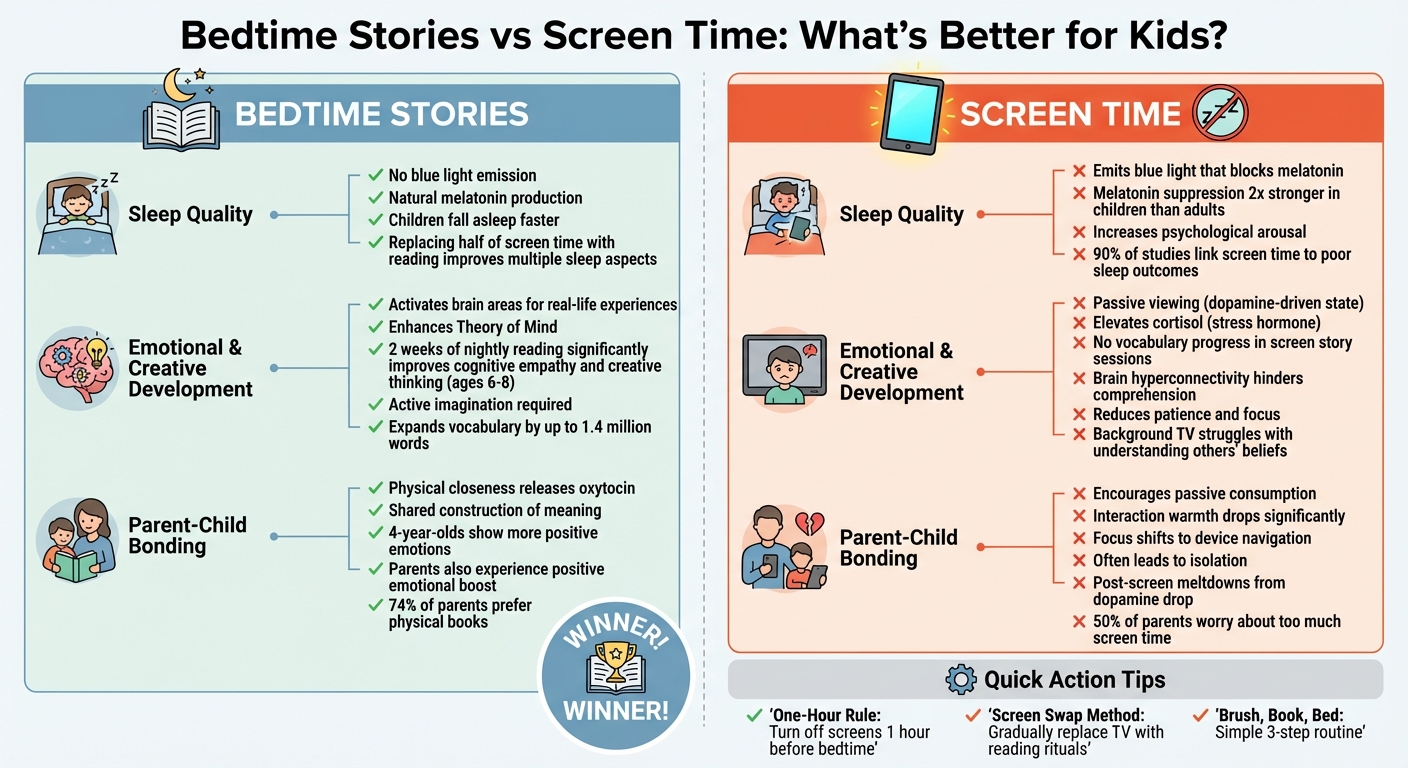
Bedtime Stories vs Screen Time: Sleep, Development, and Bonding Comparison
How Each Affects Sleep Quality
How Screens Disrupt Sleep
Screens emit blue light that interferes with melatonin production, delaying the natural process of falling asleep. This issue is particularly pronounced in children, whose larger pupils and clearer lenses allow more blue light to penetrate the retina. As a result, melatonin suppression in children can be up to twice as strong as in adults. Beyond the light itself, interactive activities like video games, scrolling through social media, or other stimulating screen-based content increase psychological arousal, making it harder for the nervous system to wind down. Even short periods of interactive screen use have been linked to reduced sleep duration and heightened sleep disturbances.
"Being exposed to blue light in the evening can trick our brain into thinking it is still daytime, disrupting circadian rhythms and leaving us feeling alert instead of tired".
On the other hand, traditional book reading offers a soothing alternative, helping the mind prepare for rest.
How Stories Help Children Sleep Better
Unlike screens, books do not emit blue light, allowing melatonin production to proceed naturally. The act of reading encourages mental relaxation, easing the transition from wakefulness to sleep. Additionally, the physical closeness during storytime - whether it's cuddling or sitting together - provides emotional comfort, reducing bedtime stress and anxiety. Studies have shown that replacing just half of a preschooler's screen time with reading can improve multiple aspects of sleep, including lowering sleep anxiety, reducing parasomnias, and helping children fall asleep faster.
"Establishing a bedtime routine that includes reading books and telling stories is a wonderful way to promote parent-child bonding while helping develop children's literacy, language, and social-emotional skills" - Dr. Leora Mogilner, Associate Professor of Pediatrics at the Icahn School of Medicine at Mount Sinai.
While screens disrupt sleep by overstimulating the brain and interfering with natural rhythms - an issue supported by nearly 90% of studies linking screen time to poor sleep outcomes - reading creates a predictable and calming bedtime ritual. This consistency not only reduces resistance to sleep but also fosters a smoother transition into rest.
sbb-itb-d6d0693
Effects on Emotional Growth and Creativity
How Stories Build Imagination
Reading fiction activates brain areas involved in real-life experiences, allowing readers to feel a range of emotions as if they were their own. This process enhances "Theory of Mind" - the ability to understand that others have their own thoughts, emotions, and perspectives. Beyond aiding sleep, storytelling plays a key role in emotional and creative development. When children hear stories, they imagine the scenes, characters, and actions, which exercises their cognitive skills in ways that pre-made visuals, like TV or movies, simply can't replicate.
In January 2026, researchers Winter, Willy, Ingersoll, Meyer, and Clabough shared findings in PLOS One from a study involving 38 children aged 6–8. Over two weeks, one group of children paused during reading sessions to reflect on characters' emotions, while the other group did not. Both groups improved in empathy and creative thinking, but the group that paused showed even greater gains in creative fluency. This highlights how interactive storytelling - where parents ask open-ended questions about characters' feelings - can amplify both empathy and creativity.
"Reading exposure during the critical stage of development prior to kindergarten seems to have a meaningful, measurable impact on how a child's brain processes stories... affirming the invaluable role of imagination." - Dr. John Hutton, MD, Pediatrician, Cincinnati Children's
The comforting tone of a parent's voice and their physical closeness during storytelling also help soothe the nervous system, encouraging children to transform words into vivid mental images. This active process strengthens cognitive skills. Compared to the passive nature of screen time, the imaginative engagement required by storytelling offers far greater developmental benefits.
Why Screen Time Limits Engagement
Unlike storytelling, screen-based content often lacks the cognitive engagement that fuels imagination. Screen time typically involves passive viewing, triggering a dopamine-driven state that can lead to emotional imbalances and "post-screen meltdowns" when the stimulation ends. Screens can also elevate cortisol (the stress hormone), keeping the brain in an overstimulated state rather than fostering the calm, focused engagement that storytelling provides.
A 2019 study led by R. Farah at the Technion, Israel, compared 32 preschoolers (ages 4–6) in two groups: one engaged in Dialogic Reading and the other in Screen Story sessions. Over 18 sessions in six weeks, the reading group improved vocabulary and strengthened brain networks related to attention. In contrast, the screen group showed no vocabulary progress and experienced "hyperconnectivity" in the brain, which actually hindered comprehension.
Additionally, preschoolers exposed to frequent background TV or with TVs in their bedrooms tend to struggle more with understanding others' beliefs and desires. The fast pace of digital content delivers instant gratification but undermines the patience and focus children develop while reading, which requires processing information at their own pace. Studies also show that reading on screens reduces emotional warmth compared to traditional books, with warmth levels dropping further over time during screen use.
"The positive emotional experiences related to shared book reading are not engendered when children listen to an e-book alone." - Roberta Michnick Golinkoff, Professor of Education, University of Delaware
The core difference is in engagement. Storytelling demands active imagination and participation, while screens offer ready-made visuals that do the thinking for children. This passive consumption weakens the cognitive abilities that interactive reading works to build.
Building Stronger Parent-Child Relationships
How Storytelling Brings Parents and Children Closer
Reading together at bedtime does more than just entertain - it creates a space for physical closeness and emotional connection. Snuggling up with a book releases oxytocin, helping to ease bedtime anxiety and calm children down for the night. The soothing rhythm of a parent’s voice acts as a natural regulator, helping children relax while strengthening the bond between parent and child.
Unlike screens, which often encourage passive consumption, shared reading invites active participation. It fosters what researchers call the "shared construction of meaning" - a collaborative process where both parent and child engage with the story. A study from the Family Life Project, involving over 1,200 families, found that when mothers used complex sentences and asked "Wh-" questions during storytelling, their children showed improved reading comprehension even seven years later.
"The cuddling and snuggling that take place with bedtime reading promote parent-child bonding and lets children know that they are loved and cared for."
– Dr. Leora Mogilner, Associate Professor of Pediatrics, Icahn School of Medicine at Mount Sinai
Interestingly, research highlights that 4-year-olds display more positive emotions during parent-led reading compared to listening to e-books. And it’s not just the kids who benefit - parents also experience a boost in positive emotions when reading aloud with their children. Asking open-ended questions like, "Why do you think the character did that?" adds depth to the interaction, showing kids that their thoughts and feelings matter.
Personalizing stories to align with a child’s interests can make these moments even more meaningful. Tailoring the narrative not only holds a child’s attention but also strengthens the emotional connection formed during these shared experiences.
How Screens Reduce Family Interaction
In contrast to the bonding that happens during shared reading, screen time often disrupts family interaction. Screen-based activities tend to encourage passive consumption, with kids zoning out in what some describe as a "blank stare". Instead of focusing on the story, attention shifts to navigating the device - commands like "swipe here" or "don’t touch that" replace meaningful conversations.
Research shows that the warmth of interaction between mothers and children drops significantly when reading happens on a screen instead of through a physical book. Physical books naturally encourage better postural synchrony, the way parents and children instinctively sit together while sharing a story.
Screens are often used as a way to buy parents extra time for chores, but this can come at the cost of shared bedtime rituals. Instead of winding down with a parent, children may find themselves staring at a device alone. Turning off a screen can also lead to a sudden dopamine drop, sparking tantrums and turning bedtime into a battleground. Unsurprisingly, 74% of parents say they prefer their child to read a physical book rather than an e-book, and half of parents with kids aged 5 to 7 worry about the impact of too much screen time.
‘Screentime is replacing storytime’: Expert warns childhood literacy rates are falling
How to Create a Screen-Free Bedtime Routine
Shifting from screen time to a calming bedtime routine doesn’t have to be a battle. The Screen Swap method eases the transition by gradually moving from stimulating activities like cartoons or video games to quieter, more interactive rituals such as reading together. This shift helps lower the household's "emotional temperature", making it easier for kids to wind down and prepare for sleep.
Start by introducing sensory cues about 30 to 60 minutes before bedtime. Dim the lights, play soft, relaxing music, or use a diffuser to create a soothing atmosphere. These subtle environmental signals help children recognize that the day is winding down without sparking resistance.
If your child is still bouncing with energy after dinner, try adding a bridge activity to ease the shift from playtime to bedtime. A slow "Pajama Walk" or brushing teeth while listening to soft music can help burn off that last bit of energy and naturally lead into storytime.
Selecting Age-Appropriate Books
Choosing the right books for bedtime is key. Avoid stories that are too thrilling or suspenseful, as they can leave kids too excited to sleep. Instead, focus on books that match their developmental stage and promote relaxation.
| Age Group | Recommended Duration | Book Type |
|---|---|---|
| Newborns to 1 Year | 5 minutes | Board books with simple images and soothing tones |
| Preschoolers (3–5) | 10 minutes | Picture books with rhymes and predictable patterns |
| School-Aged (6+) | 15–20 minutes | Chapter books with manageable plots for shared reading |
For toddlers, go with board books featuring calming visuals. Preschoolers often enjoy picture books with repetitive phrases they can anticipate and join in on. For older kids, chapter books work well, but stick to one or two chapters to avoid overstimulation.
Personalizing Stories for Your Child
Once you’ve got the right books, adding a personal touch can make bedtime stories even more engaging. Turn your child into the hero of the story by using their name as the protagonist and weaving in familiar details like their favorite toys, pets, or siblings [49, 52, 54].
"When children see themselves in a story, it transforms reading from a passive activity into a personally meaningful experience. Personalization creates emotional engagement that generic stories simply cannot match."
– Dr. Natalia Kucirkova, Professor of Early Childhood Education
You can also use storytelling to address real-life challenges. For example, if your child is nervous about an upcoming dentist visit or starting a new school, create a story where they overcome that exact challenge [51, 54]. For families with multiple children, the Shared Hero approach is a great option. Craft a tale where siblings team up on an adventure - perhaps the older one acts as a protector while the younger takes on a scout role. This not only keeps both kids engaged but also reinforces their bond.
If you're short on time or energy, services like Kidooki can help by creating personalized bedtime stories tailored to your child’s name, interests, and age. With soothing illustrations and professional narration, it’s an easy way to keep bedtime special, even on busy nights.
Building a Consistent Bedtime Schedule
A consistent routine helps reinforce the calming atmosphere created by thoughtful book choices and personalized storytelling. The Brush, Book, Bed sequence is a simple way to create a predictable rhythm your child’s body will learn to recognize. Start with brushing teeth to a calming song, transition into 15–20 minutes of interactive reading, and end with a quick "connection check-in" where you ask, “Is there anything you want to tell me before you go to sleep?” This final moment can ease any lingering worries and leave your child feeling secure.
During storytime, try Dialogic Reading to keep your child engaged. Ask open-ended questions like, “Why do you think the bear looks sad?” to encourage interaction rather than letting them zone out. Set clear boundaries, such as “two books or 15 minutes,” to prevent bedtime stalling and ensure the routine remains calming.
You can also introduce a Quiet Basket filled with screen-free activities like puzzles, coloring books, or sensory bottles that only come out in the evening. This reinforces the idea that nighttime has its own special rules. Research shows that reading to children in early childhood can expand their vocabularies by up to 1.4 million words compared to kids who aren’t read to. These small but effective steps can transform bedtime into a peaceful, screen-free experience that sets the stage for restful sleep.
Conclusion
Research increasingly supports the idea that books are a better choice than screens at bedtime. Studies show that 90% of research links screen time to shorter sleep and delayed bedtimes. In contrast, bedtime stories offer a calming alternative. Physical books avoid the disruptive blue light that screens emit, which can interfere with melatonin production. Plus, the soothing rhythm of a parent’s voice helps relax a child’s nervous system [7,39].
But the benefits go beyond just better sleep. Stories also foster emotional growth and spark creativity. Reading fiction activates areas of the brain tied to mental imagery and empathy, helping kids imagine scenarios and understand different viewpoints. On the other hand, too much screen time may hinder a child’s ability to develop Theory of Mind. Remarkably, just two weeks of nightly reading has been shown to significantly improve cognitive empathy, creative thinking, and originality in children aged 6–8.
"Reading exposure during the critical stage of development prior to kindergarten seems to have a meaningful, measurable impact on how a child's brain processes stories... affirming the invaluable role of imagination."
– Dr. John Hutton, Pediatrician, Cincinnati Children's
Bedtime stories also nurture the bond between parent and child. Sharing a physical book encourages closeness and cuddling, which boosts oxytocin - the hormone that fosters feelings of love and security [7,39]. In contrast, screens often lead to passive consumption and a sense of isolation.
Making the switch from screens to books doesn’t have to be difficult. Start with the One-Hour Rule: turn off all screens at least one hour before bedtime to help the body naturally produce melatonin. Another approach is the Screen Swap method, where you gradually replace TV time with a nightly reading ritual. And on those hectic nights, tools like Kidooki can provide personalized bedtime stories. These small adjustments can transform bedtime into a peaceful, screen-free routine that promotes better sleep, sparks creativity, and strengthens family connections.
FAQs
How much screen time before bed is too much?
Excessive screen use before bedtime has been linked to poor sleep quality, though there's no universal threshold for what's too much. According to the American Academy of Pediatrics, children aged 2 to 5 should stick to one hour of high-quality programming per day and avoid screens entirely before bed. Why? Screens can delay falling asleep, interfere with melatonin production, and disrupt natural sleep cycles. To promote better rest, it's best to establish a calming, screen-free routine before bedtime.
Are e-books as effective as printed bedtime stories?
Printed books have a special charm that often creates stronger connections and engagement, especially for children. Studies reveal that kids tend to prefer print books because they offer a sensory experience - turning pages, feeling the paper - that digital formats just can't replicate. Plus, print books eliminate the distractions often found in digital devices, leading to deeper and more meaningful interactions between parents and children.
That said, e-books have their place too. When thoughtfully designed, they can help kids improve comprehension and expand their vocabulary. They work best as a supplement, not a replacement. While printed stories shine when it comes to fostering emotional bonds, e-books can fit into daily routines as a helpful addition when used with care.
What if my child only falls asleep with a screen?
Screens before bed can interfere with sleep quality, particularly for children who struggle with self-regulation. To help them unwind and build emotional connections, try swapping screen time with calming bedtime stories. Creating a consistent routine that includes quiet, soothing activities - like reading their favorite book - can make a big difference. Over time, this approach may reduce their reliance on screens and encourage better sleep habits.