How to Create a Calming Bedtime Routine in 5 Steps
A consistent nightly routine helps signal to your child’s brain and body that it’s time to relax and prepare for sleep. This can lead to better sleep quality, longer rest, and even improve their mood and cognitive performance the next day. Plus, it strengthens your bond with your child through shared, peaceful moments.
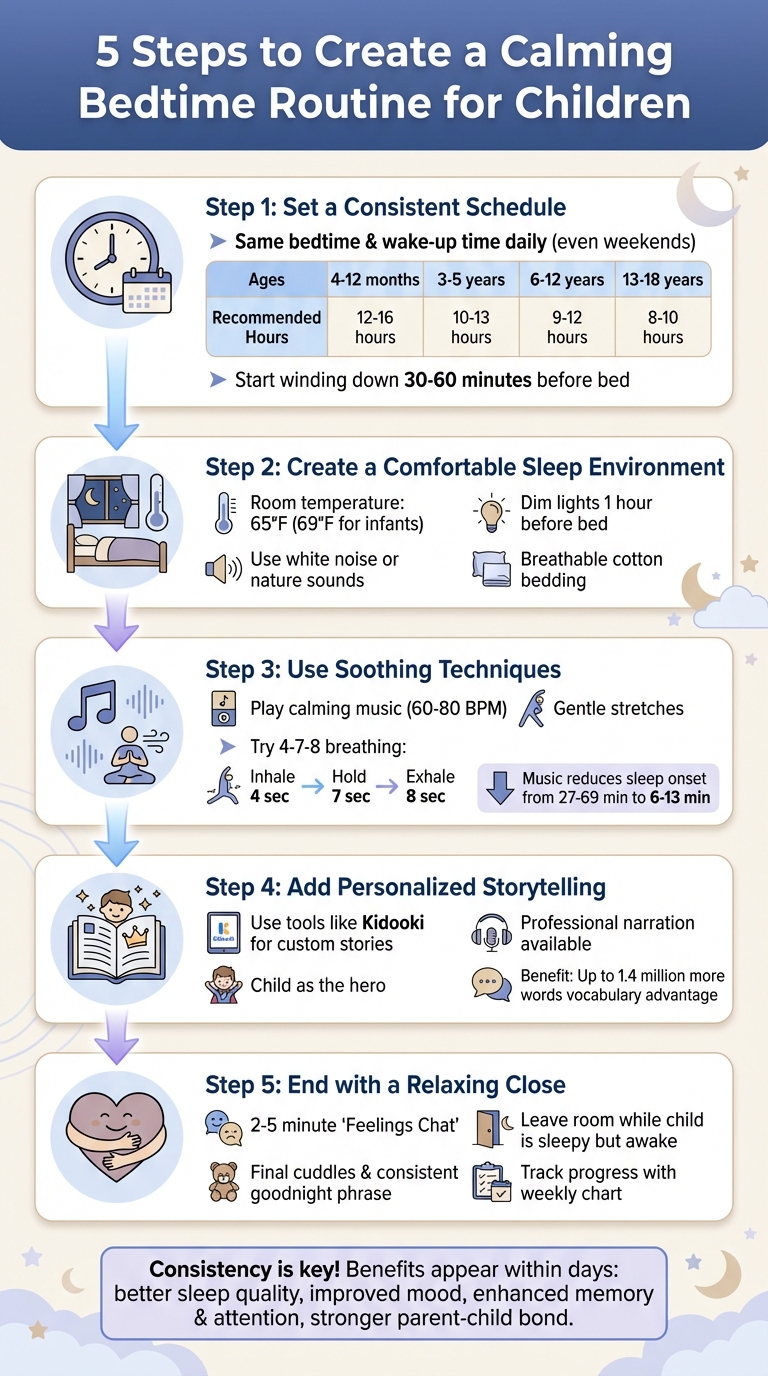
Here’s a quick breakdown of the 5 steps to create a calming bedtime routine:
- Set a Consistent Schedule: Stick to the same bedtime and wake-up times daily, even on weekends. This helps regulate your child’s internal clock.
- Create a Comfortable Sleep Environment: Keep the room cool (around 65°F), dim the lights, and use calming sounds like white noise or nature sounds.
- Use Soothing Techniques: Incorporate calming music, breathing exercises (like the 4-7-8 method), or gentle stretches to help your child wind down.
- Add Personalized Storytelling: Use tools like Kidooki to create bedtime stories featuring your child as the hero, making the experience relaxing and engaging.
- End with a Relaxing Close: Wrap up with cuddles, a comforting phrase, and leave the room while your child is sleepy but awake to encourage independent sleep.
Consistency is key. Even small, predictable rituals can make a big difference in your child’s sleep quality and emotional well-being.
5-Step Calming Bedtime Routine for Children
How to Build a Calm Bedtime Routine for Kids in Just 5 Minutes
sbb-itb-d6d0693
Step 1: Set a Consistent Schedule
Having a regular bedtime helps your child’s internal clock adjust, making it easier for them to fall asleep and wake up on time. When bedtime stays consistent, the body naturally learns to manage sleep patterns more effectively.
Choose a Fixed Bedtime
To figure out the right bedtime, subtract the amount of sleep your child needs from their wake-up time. For example, if your 5-year-old needs to wake up at 7:00 AM and requires 11 hours of sleep, their bedtime should be 8:00 PM. Here’s a handy guide to match sleep needs by age:
| Age Group | Recommended Total Sleep (per 24 hours) |
|---|---|
| 4 to 12 months | 12 to 16 hours (including naps) |
| 1 to 2 years | 11 to 14 hours (including naps) |
| 3 to 5 years | 10 to 13 hours (including naps) |
| 6 to 12 years | 9 to 12 hours |
| 13 to 18 years | 8 to 10 hours |
Keep both bedtime and wake-up time consistent every day, including weekends. If there’s a difference between weekday and weekend schedules, limit it to no more than one hour to prevent disrupting your child’s natural sleep rhythm.
Once you’ve established a regular bedtime, the next step is creating a smooth transition to sleep.
Start Winding Down Early
Start winding down 30 to 60 minutes before bedtime. This quiet period helps your child shift from active play to more relaxing activities. Turn off screens at least an hour before bed and replace them with calming options like a warm bath, quiet play, or reading in dim light. Dimming the lights and lowering noise levels in your home as bedtime approaches can also signal that it’s time to rest. Use this time to address any last-minute needs like water, snacks, or bathroom trips to avoid interruptions later.
Step 2: Create a Comfortable Sleep Environment
Once you've set a consistent bedtime, the next step is making sure your child's sleep environment supports restful nights. The layout and conditions of their bedroom can have a big impact on how well they sleep.
Adjust Lighting and Room Ambiance
Light plays a major role in regulating your child's internal clock. Exposure to bright or blue light can interfere with melatonin production, which is essential for sleep. To encourage their body to wind down, dim the lights around your home about an hour before bedtime. This gradual change in lighting helps signal that it's time to sleep, reinforcing the bedtime routine.
After setting the right lighting, focus on creating a cozy and relaxing atmosphere by fine-tuning the room's temperature and bedding.
Set the Right Temperature and Bedding
Most children sleep best when their room is kept around 65°F. Infants, however, may need it slightly warmer - up to 69°F - because their smaller bodies are more sensitive to temperature shifts. A cooler room complements the natural drop in core body temperature that happens during sleep. Dr. David Rosen, a sleep medicine expert, explains:
"If the room is too hot for an adult to sleep, it is probably too hot for a baby as well."
Opt for breathable cotton pajamas and bedding to help your child maintain a comfortable body temperature through the night. Using a fan can keep the air circulating and prevent the room from feeling stuffy. You can also layer blankets, making it easy to adjust if your child feels too warm or cold. On hot days, keep the blinds or curtains closed to block out heat and maintain a cooler room.
Once the temperature is set, consider adding soothing background sounds to minimize disruptions.
Add Calming Sounds
Consistent background noise can help mask sounds that might wake your child, like traffic, conversations, or doors closing. White noise machines or fans are great options for creating a steady, soothing hum. If white noise feels too harsh, you can try green noise, which is softer and more balanced. Another option is gentle nature sounds, such as soft rain, ocean waves, or forest soundscapes, which can create a calming and peaceful environment. The key is to block out interruptions without making the room completely silent, as some light noise can actually help your child sleep better.
Step 3: Use Soothing Techniques
Help your child shift from an active state to a calm, restful one by incorporating gentle methods like calming music and simple breathing exercises. These techniques can play a key role in completing your bedtime routine.
Play Calming Music
Music with a tempo of 60–80 BPM can align with your child's resting heart rate and breathing patterns, promoting relaxation. Research shows that adding music to a nightly routine significantly reduces the time it takes to fall asleep, cutting it down from 27–69 minutes to just 6–13 minutes for individuals with insomnia. Grammy-winning producer Barry Goldstein explains that slowing heart rate and breathing helps quiet the nervous system, creating a sense of calm.
Instrumental music works best, as lyrics can be mentally stimulating. Classical compositions by Mozart or Chopin, solo piano pieces, or nature sounds like soft rain or ocean waves are excellent choices. According to Lynelle Schneeberg, PsyD, from the American Academy of Sleep Medicine, incorporating music into a bedtime routine can signal the brain that it’s time to wind down.
| Music Type | Key Characteristics | Benefits for Children |
|---|---|---|
| Classical | Steady tempo (e.g., Mozart, Chopin) | Mimics restful sleep patterns and distracts from repetitive, worrying thoughts. |
| Instrumental | Solo piano or acoustic guitar | Offers soothing melodies without the mental effort of processing lyrics. |
| New Age / Nature | Rainfall, ocean waves, bird songs | Encourages relaxation and masks disruptive background noises. |
| Lullabies | Gentle rhythms, soft vocals | Helps regulate emotions and promotes the release of oxytocin, the "cuddle hormone." |
For safety and comfort, play music through a small external speaker instead of headphones, which can lead to ear canal issues in children. Start playing the music about 30–60 minutes before bedtime to help your child transition into a relaxed state.
Try Breathing Exercises and Gentle Stretches
Simple breathing exercises can ease tension and prepare your child’s body for sleep. The 4-7-8 technique is a great option: inhale for 4 seconds, hold for 7 seconds, and exhale for 8 seconds. This method activates the body’s natural relaxation response.
For younger children, try engaging techniques like "Teddy's Gentle Rise" - place a stuffed toy on their stomach and encourage them to watch it rise and fall as they breathe silently. Another fun activity is "Star Breathing," where they either imagine or draw a star and trace its lines while breathing in and out. This practice helps center their focus and slow their heart rate, effectively calming both body and mind.
These simple yet effective methods can make bedtime a smoother and more peaceful experience for everyone.
Step 4: Add Personalized Storytelling with Kidooki

After your child has settled down with calming music and breathing exercises, introducing personalized storytelling can be the perfect way to ease them into sleep. Unlike traditional bedtime books, stories that place your child at the center of the narrative create a stronger connection while maintaining the peaceful atmosphere you've carefully built.
How Kidooki Brings Magic to Bedtime
Kidooki turns bedtime into a truly memorable experience by crafting custom stories where your child is the hero. Simply input your child’s name, age, and interests - whether they love space, dinosaurs, or magic - and Kidooki generates a new adventure every night. Using AI technology, it can even create characters that resemble your child based on uploaded photos or descriptions. These stories can also feature their favorite toys, friends, and family members. Each tale is beautifully complemented by watercolor illustrations and professional narration, helping your child transition from an active day to a calm, restful state.
Parents have embraced Kidooki, giving it a 4.9/5 rating for its ability to deliver engaging, personalized stories in seconds - all within a kid-safe, ad-free platform.
"As a father, I wanted to create a more magical and personal bedtime experience for my own family. I built Bedtime Story Maker to help parents like me share a special moment of calm and creativity with their kids at the end of the day."
– Zaniar, Founder
Keeping Your Child Calm and Engaged
Hearing their name and seeing familiar elements woven into the story keeps your child engaged in a way that feels personal yet soothing. The gentle storylines, complete with happy and calming endings, are designed to guide your child toward sleep without overstimulation. Professional narration adds to the serene experience, giving parents a chance to relax and enjoy the story alongside their child.
Kidooki also features a "Night Mode" that reduces blue light exposure, helping prepare your child’s brain for sleep while still offering a visually enchanting experience. Favorite stories can be saved, and the high-resolution artwork can be shared with grandparents or co-parents, making bedtime a shared and cherished tradition.
Studies show that children who are read to during early childhood can gain a vocabulary advantage of up to 1.4 million more words compared to those who are not. Listening to stories also activates brain areas linked to reading comprehension and mental imagery, allowing children to fully immerse themselves in the narrative as they drift off to sleep. This personalized storytelling step helps lay the groundwork for the final moments of your bedtime routine.
Step 5: End with a Relaxing Close and Stay Consistent
Give Final Cuddles
Once the story wraps up, take a few extra minutes to create a comforting end-of-day ritual. This is the time to help your child feel safe, loved, and ready to relax into sleep. Spend 2–5 minutes on a quick "Feelings Chat" by asking something simple like, "What made you smile today?" This can bring emotional closure to their day and ease any lingering worries.
Establish a consistent "lights-out" phrase to signal bedtime - something like, "I love you, see you in the morning." Pair this with a cuddle, a kiss, and a reassuring affirmation like, "You are safe, you are loved, now sleep". These small, predictable gestures create a sense of security, helping your child unwind.
"Your bedtime ritual is not a test. It is a love note you write together every night." - Motherly
When your child is sleepy but still awake, leave the room. This encourages them to learn how to fall asleep on their own, a skill that can help reduce nighttime disruptions. Most children adapt to this within one to two weeks when you stay consistent. If your child struggles at first, try gentle check-ins - return after two minutes to offer brief, positive reinforcement if they’ve stayed calm and in bed.
Track Your Routine Progress
Once you've established these calming bedtime practices, tracking your routine can help identify patterns and celebrate progress. A simple weekly chart can show how consistently you're completing steps and how your child feels each night. Studies suggest that noticeable improvements in sleep can happen within just a few nights of sticking to a routine.
| Day | Routine Steps Completed | Child Feedback/Mood | Notes |
|---|---|---|---|
| Monday | Yes/No | Happy/Restless/Calm | e.g., Needed extra water |
| Tuesday | Yes/No | Happy/Restless/Calm | e.g., Loved the new story |
| Wednesday | Yes/No | Happy/Restless/Calm | e.g., Fell asleep faster |
| Thursday | Yes/No | Happy/Restless/Calm | |
| Friday | Yes/No | Happy/Restless/Calm | |
| Saturday | Yes/No | Happy/Restless/Calm | |
| Sunday | Yes/No | Happy/Restless/Calm |
To make it fun, let your child add a sticker or checkmark to the chart after completing each step. This small reward fosters a sense of achievement and helps them take pride in their bedtime routine. On hectic nights, stick to a shortened version of the routine rather than skipping it altogether - even a quick 1-minute tooth brushing and a short story can maintain the habit.
"Sleep is a skill, not a trait." - Dr. Chris Winter, President of Charlottesville Neurology and Sleep Medicine
Conclusion
A calm bedtime routine thrives on consistency. These five steps lay the groundwork for an effective nightly ritual: sticking to a set schedule, crafting a cozy sleep environment, incorporating soothing activities, weaving in personalized storytelling with Kidooki, and wrapping up with a relaxing finish. Together, they can promote better sleep and offer your child a sense of emotional comfort.
Regular routines can lead to noticeable improvements in sleep quality and behavior within just a few days. Benefits include enhanced working memory, better attention, improved language skills, and even a lower risk of obesity during adolescence. Plus, these routines strengthen the bond between you and your child while also helping reduce your own stress levels as a parent.
"A bedtime routine provides multiple benefits to child and family functioning at a time of day that most parents are present with their children." – Jodi A. Mindell, Ph.D., Saint Joseph's University
Choose a routine that works for your family and can be maintained nightly. Make it personal - let your child pick their pajamas, select a bedtime story, or request a favorite lullaby. As they grow, tweak the routine to suit their changing needs and interests.
Consistency is key. Over time, these rituals help trigger melatonin release, signaling your child’s body that it’s time to wind down. Beyond better sleep, you’re fostering healthy habits and creating memories that will last a lifetime.
FAQs
How long should a bedtime routine take?
A bedtime routine usually lasts between 30 to 60 minutes. Sticking to this duration allows kids to unwind and shift gently into sleep mode. The key is to establish a consistent and calming sequence of activities. Things like reading a book together or dimming the lights can create a peaceful environment that signals it's time to rest.
What if my child won’t stay in bed after lights out?
If your child struggles to stay in bed after lights out, establishing a steady bedtime routine can make a big difference. Incorporate soothing activities like reading a story together, chatting about the day's events, or listening to gentle music to create a calming atmosphere. Make sure the house stays quiet and the bedroom feels cozy and conducive to sleep. Following the same routine and bedtime every night helps your child link these actions with sleep, making it easier to settle down and reducing bedtime battles.
Is it okay to use Kidooki every night?
Using Kidooki every night can help create a steady and soothing bedtime routine, especially if it encourages relaxation and better sleep for your child. Customize its use to fit your child’s preferences, and pair it with other calming activities like reading a story or using soft, dim lighting to make the routine even more effective.