
The Ultimate Guide to Bedtime for 3-6 Year Olds
Getting kids aged 3–6 to sleep well isn’t just about avoiding cranky mornings - it’s crucial for their emotional, social, and cognitive growth. The key? A consistent bedtime routine tailored to their age and sleep needs. Here’s what you need to know:
-
Sleep Recommendations:
- Ages 3–5: 10–13 hours (including naps).
- Age 6: 9–12 hours (no naps).
-
Bedtime Routines:
- Start with a calming activity (e.g., bath or quiet play).
- Follow a consistent sequence: pajamas, teeth brushing, and a short story.
- Leave the room when your child is drowsy but awake to encourage self-soothing.
-
Adjust for Napping:
- If your child naps, keep bedtime between 7:00–8:00 PM.
- No naps? Move bedtime earlier (6:30–7:30 PM).
-
Extra Tips:
- Dim lights and turn off screens an hour before bed.
- Use comfort items like a stuffed animal or blanket.
- Maintain a cool room temperature (65°F–70°F).
Personalized storytelling apps like Kidooki can make bedtime smoother by engaging kids with stories featuring their name and favorite things. Start with a 10–15 minute session to help them unwind and fall asleep faster.
Want a smoother bedtime? Stick to a routine, adjust for your child’s age and needs, and create a calming environment.
BEDTIME ROUTINE: Ideal Toddler and Preschooler Bedtime Routine | The Mom Psychologist
Sleep Schedules by Age
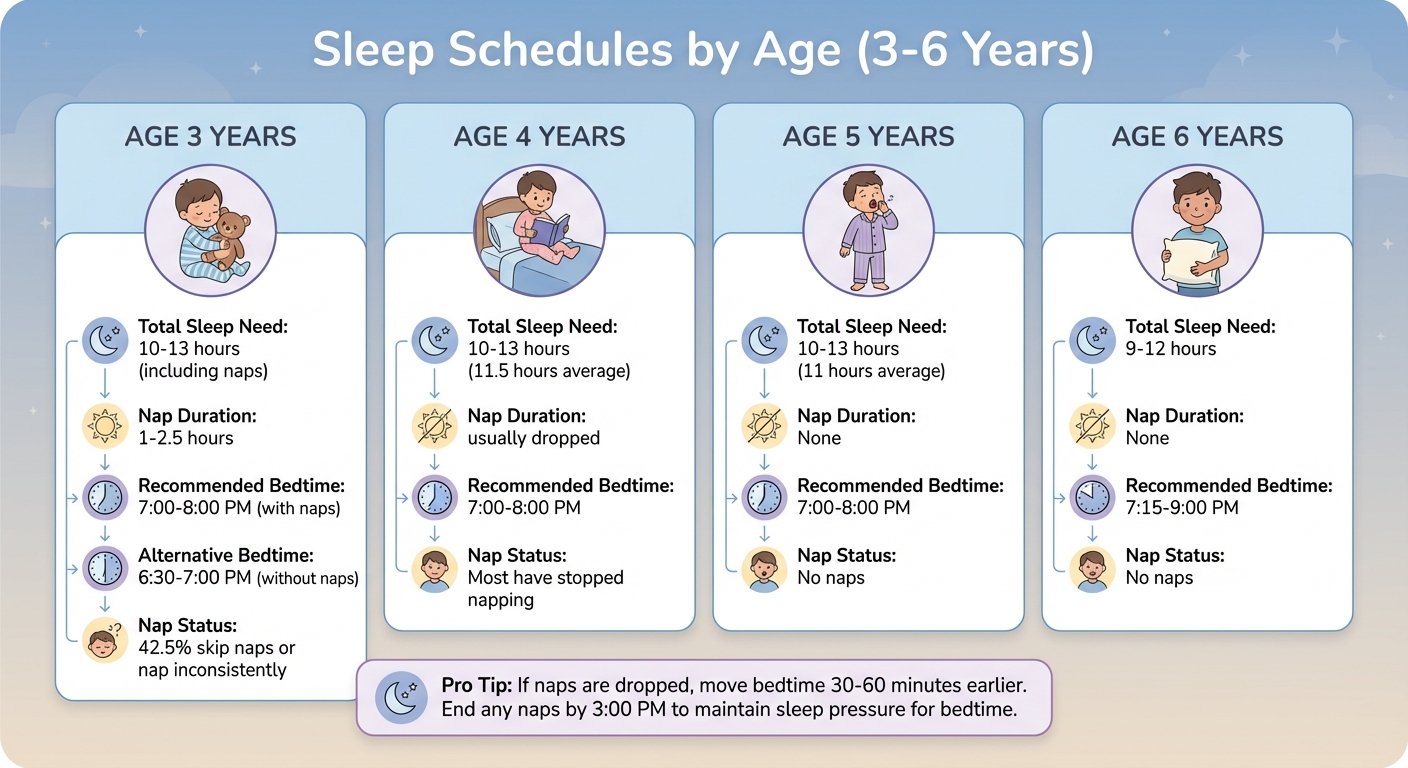
Sleep Schedule Guide for Children Ages 3-6 Years
Sleep Needs for 3-Year-Olds
Three-year-olds require 10–13 hours of total sleep within a 24-hour period, which includes both nighttime sleep and daytime naps. Typically, naps last between 1–2.5 hours, though up to 42.5% of children at this age may skip naps altogether or nap inconsistently.
For children who still nap regularly, bedtime should generally fall between 7:00–8:00 PM. A sample schedule might look like this: wake up at 7:00 AM, nap from 12:30 to 2:00 PM, and go to bed by 7:30 PM. If your child is transitioning away from naps, an earlier bedtime - around 6:30 PM or 7:00 PM - can help make up for the lost daytime rest. On days when naps are skipped, adjust bedtime by 30–60 minutes earlier to ensure they get enough rest.
Dr. Vaishal Shah of Cleveland Clinic suggests using "clock math" to determine the perfect bedtime by working backward from your child's wake-up time. For those dropping naps, replace them with 30–60 minutes of quiet time in their room. This allows for relaxation without the pressure to sleep.
Sleep Changes for 4–6-Year-Olds
Between the ages of 4 and 6, sleep patterns begin to shift. While 4- and 5-year-olds still need 10–13 hours of sleep, the requirement for 6-year-olds decreases to 9–12 hours. By this stage, most children have stopped napping entirely, consolidating all their sleep at night.
| Age | Total Sleep Goal | Recommended Bedtime | Nap Status |
|---|---|---|---|
| 4 Years | 11.5 hours | 7:00 PM – 8:00 PM | Usually dropped |
| 5 Years | 11 hours | 7:00 PM – 8:00 PM | None |
| 6 Years | 9–12 hours | 7:15 PM – 9:00 PM | None |
These recommendations serve as a baseline but can be adjusted based on individual sleep needs.
For children who no longer nap, a possible schedule could include waking at 7:00 AM, having quiet time around 1:30 PM, and starting the bedtime routine at 6:30 PM with lights out by 7:00 PM. If naps are still part of the routine, make sure they’re spaced at least 4 hours apart from bedtime to avoid resistance to falling asleep. Additionally, any naps should end by 3:00 PM to maintain enough "sleep pressure" for an easy bedtime.
How to Build a Bedtime Routine
Main Steps of a Bedtime Routine
For kids aged 3–6, a bedtime routine that lasts about 30–45 minutes works best. It’s helpful to break it into three phases: connection (10–15 minutes), calming (15–20 minutes), and preparation (5–10 minutes). Keeping the activities in the same order and at the same time every night helps signal to your child that it’s time to wind down.
Start by giving your child a 15-minute warning to ease the transition from playtime to bedtime. Then, move into hygiene steps: a warm bath (which naturally lowers body temperature and promotes sleepiness), brushing teeth, and putting on pajamas. A quick bathroom visit at this stage can also prevent middle-of-the-night interruptions.
Next, set the tone for sleep by reading 2–3 short books or a chapter from a longer one. Include a brief connection moment, like sharing something you’re thankful for, having a short conversation, or singing a lullaby. The key is to leave the room while your child is drowsy but still awake, encouraging them to fall asleep on their own.
"Bedtime goes back to Pavlov - it's a conditioned response. When you have a routine that's the same every night, the child starts to relax and get sleepy; those responses are reliably cued or triggered." - Lynelle Schneeberg, Psy.D., Pediatric Sleep Psychologist
To avoid bedtime battles, give your child simple choices, like picking between two pajama sets or bedtime stories. If they keep asking for "one more thing", try using bedtime tickets: give them two tickets they can trade for extras like an extra hug or a sip of water. Once the tickets are gone, no more requests are allowed. If your child gets out of bed, use the "boring return" method by calmly guiding them back with little eye contact or conversation.
Routines for Nappers vs. Non-Nappers
Once you establish a routine, tweak it based on whether your child still naps or not. While kids in this age range need about 10–13 hours of sleep in a 24-hour period, the way that sleep is divided changes depending on whether they nap.
| Feature | Children Who Nap (3–4 years) | Children Who Do Not Nap (4–6 years) |
|---|---|---|
| Total Sleep Need | 11–13 hours (including nap) | 10–12 hours (night only) |
| Daytime Rest | 1–2 hour nap in the afternoon | 30–60 min "Quiet Time" (books/puzzles) |
| Bedtime Range | Typically 7:00 PM – 9:00 PM | Typically 6:30 PM – 8:00 PM |
| Wake Time | Consistent morning rise time | Consistent morning rise time |
| Signs of Need | Falls asleep easily during nap; stays awake until 8:00 PM+ | Takes 30+ min to fall asleep for nap; hyperactive in evening |
For kids who no longer nap, include a 60-minute quiet time in the afternoon with low-energy activities like reading or puzzles. This helps them recharge without building up too much energy. If your child skips a nap, consider moving bedtime earlier by 30–60 minutes to avoid them becoming overtired, which can make falling asleep harder.
sbb-itb-d6d0693
Calming Techniques for Better Sleep
Building on your bedtime routine, these strategies can help further relax and prepare your child for a restful night.
Quiet Wind-Down Activities
In the hour leading up to bedtime, shift from active play to quieter, more soothing activities. Start by dimming the lights and turning off all electronic devices - like TVs, tablets, and phones - to avoid the blue light that can interfere with melatonin production.
Choose activities that help relax both the body and mind. If a bath isn't already part of your nightly routine, consider another calming ritual to help lower your child's body temperature, which can promote sleep. Afterward, try simple stretches like Child's Pose or breathing exercises. "Birthday Candle" breaths - where your child inhales deeply through their nose and exhales slowly through their mouth as if blowing out candles - can be especially effective for slowing their heart rate and soothing their nervous system.
Reading gentle, non-suspenseful stories is another great way to wind down. You might also try the "Rose, Bud, Thorn" exercise, where your child shares one positive moment from their day, something they're looking forward to, and one worry. This helps them process emotions and settle their thoughts before sleep. Other calming options include mindful coloring, simple puzzles, or playing with non-stimulating toys like playdough.
Maintain a comfortable bedroom temperature between 65°F and 70°F, as this range supports better sleep. If background noise helps your child relax, use a white noise machine or nature sounds, such as waves or forest ambiance, to drown out household noises. For children who have trouble settling down, a "calm-down jar" filled with glitter can provide a soothing visual distraction to help them focus and relax.
Incorporating these activities into your wind-down routine can make bedtime smoother. Adding comfort items can further enhance your child’s sense of security.
Using Comfort Items
Comfort items can provide emotional reassurance when it’s time for you to leave the room. Let your child choose a special stuffed animal, blanket, or pillow to act as their "guardian" at bedtime. This sense of ownership strengthens their connection to the item and helps it become a soothing presence. Keep these items reserved for bedtime to reinforce their association with sleep rather than play.
"This is a good time to introduce a stuffed animal or comfort blanket for extra reassurance when you leave the room." – Sleep Foundation
Comfort items can be especially helpful for managing separation anxiety, which often peaks between ages 3 and 6 when fear of the dark is common. You can even incorporate these items into your calming rituals. For example, try "Teddy’s Gentle Rise", where your child places their stuffed animal on their tummy and watches it rise and fall as they breathe. For children with high energy levels or ADHD, weighted blankets or deep-pressure hugs may provide the soothing sensory input they need.
Always ensure that comfort items are safe - avoid anything with small parts, loose ribbons, or buttons that could be a choking hazard. If your child wants to bring multiple toys to bed, offer limited choices, such as, "Would you like this stuffed animal or that one tonight?" This keeps bedtime calm and avoids overstimulation.
Personalized Storytelling with Kidooki

Comfort items and calming activities are essential for a bedtime routine, but the right story can tie everything together. Personalized storytelling adds a unique touch, creating a strong signal that it’s time to wind down.
Why Personalized Stories Work
When kids hear their own names in a story, their attention skyrockets. In fact, research shows they stay focused 40% longer when they’re the star of the narrative compared to traditional stories.
But the benefits don’t stop there. Listening to stories releases oxytocin - the hormone that strengthens bonds - while reducing cortisol (the stress hormone) by 23% in just 15 minutes. Dr. James Peterson, a Stanford neuroscientist, explains:
"Narrative listening activates the brain's default mode network, which is associated with relaxation and introspection. This is the opposite of the alert, problem-solving mode children are in during the day".
And according to Dr. Mitchell, a leading researcher:
"The 10-15 minutes you spend reading to your child at bedtime may be the most important parenting time of the day. It's when children feel safest, most loved, and most open to connection."
Kids hearing personalized stories also fall asleep about 8 minutes faster on average compared to generic tales. The nightly routine creates a classical conditioning effect - your child’s brain begins to associate the story with sleep time even before it begins. For children dealing with anxiety or fear of the dark, these stories offer a comforting way to explore and process emotions through relatable characters.
Kidooki Features and Plans
Kidooki takes personalized storytelling to the next level, crafting nightly tales that include your child’s name, favorite toys, friends, and even pets. The app narrates stories at a slower pace, with a softer tone and lower pitch to help calm the nervous system. Gentle watercolor illustrations provide soothing visuals without the overstimulation of bright, blue-light screens.
You can create profiles for multiple children, customizing stories to match their developmental stage - whether it’s simple vocabulary for a 3-year-old or more layered narratives for a 6-year-old. Plus, all stories are saved, so you can easily revisit your child’s favorites whenever they ask.
| Plan | What's Included | Best For |
|---|---|---|
| Free Trial | Personalized stories, audio narration, illustrations, story library | Exploring features without commitment |
| Subscription | Nightly new stories, multiple profiles, unlimited library, professional narration | Families seeking a consistent bedtime routine |
For optimal results, keep the room between 65°F and 70°F, with dim, warm-toned lighting. A 10–15 minute story session at the same time each night strengthens the sleep cue. The app’s audio-only mode is ideal for energetic kids, offering a calming focus without screen distractions. By maintaining a steady environment - consistent temperature, dim lighting, and a fixed bedtime - you’ll create the perfect setting for Kidooki to work its magic.
Pair Kidooki’s personalized storytelling with your current bedtime routine for a peaceful, connected end to the day.
Conclusion: Key Takeaways for Smoother Bedtimes
Consistency is the secret to bedtime success. Sticking to the same sequence of activities at the same time every night - even on weekends - helps regulate your child's internal clock, making it easier for them to fall asleep. As Dr. Chris Winter, President of Charlottesville Neurology and Sleep Medicine, explains:
"Sleep is a skill, not a trait. Developing good sleep habits and routine most certainly insulates for future sleep issues".
A three-step framework can make bedtime routines more effective:
- Spend 10–15 minutes connecting with your child.
- Follow that with 15–20 minutes of calming activities.
- End with 5–10 minutes of sleep preparation.
This structure supports relaxation and naturally transitions into a personalized storytelling session. Start winding down at least an hour before bedtime by turning off screens to avoid blue light, which can disrupt melatonin production. Keep the bedroom cool (around 65°F to 70°F) and use dim, warm-toned lighting to create a soothing atmosphere. These small adjustments can make a big difference in setting the stage for restful sleep.
Storytelling plays a central role in calming bedtime routines. A global study of over 10,000 families found that children with consistent bedtime routines fall asleep faster, sleep longer, and wake up less often during the night.
Kidooki takes these principles to the next level with personalized storytelling, offering nightly stories tailored to your child’s interests, complete with calming narration and gentle visuals. Try the free trial and see how a 10–15 minute story can turn bedtime into a peaceful, bonding experience.
FAQs
How do I know if my child is ready to drop naps?
Most kids give up naps somewhere between ages 3 and 5, but it’s not the same for everyone. How do you know if your child is ready to drop naps? Here are some clues:
- They don’t seem tired or interested in napping when they usually would.
- For 1–2 weeks straight, they actively resist taking naps.
- Napping during the day starts to interfere with their ability to fall asleep at night.
If naps are no longer part of their routine, introducing a quiet time can help ensure they still get some much-needed downtime.
What should I do if my child keeps getting out of bed?
If your child keeps climbing out of bed, try setting up a clear and consistent bedtime routine. This helps signal to them that it’s time to wind down and sleep. Be firm about the rules, explain them clearly, and make the evening atmosphere calm and quiet. Positive reinforcement can also work wonders - praise or reward them when they stay in bed. Avoid getting into power struggles, as this can escalate the situation. If the problem persists, consider tweaking their nap schedule or making changes to the bedroom setup to minimize overstimulation. Stick to the expectation that they stay in bed, and reinforce it consistently.
How can I use Kidooki without screens before bed?
Creating a calming, screen-free bedtime routine is easy with Kidooki. Incorporate activities like reading books, sharing stories, or listening to gentle music to help your child wind down. These moments not only promote healthy sleep habits but also reduce reliance on screens before bed. You can also encourage relaxing activities like drawing or listening to soft tunes to create a peaceful atmosphere. Kidooki provides age-appropriate books and storytelling ideas, making bedtime a soothing and enjoyable experience for your little one - without the need for screens.